Architecture Masterclass: High-Throughput KV-Cache & Token Economics — How Does It Work in Production?
Topic (Position 0 Executive Summary)
Topic: First-principles systems design on latency engineering, prompt caching, and convincing the CISO on data isolation. This Use Case Guide examines how software architects deploy Architecture Masterclass: High-Throughput KV-Cache & Token Economics in production environments while maintaining deterministic performance, zero-trust security boundaries, and predictable FinOps economics.
Part 1: The Business Story (Question ➔ Journey ➔ Conflict)
The Question
Across every architectural review I lead with engineering organizations and enterprise leaders, one recurring question dominates the whiteboard: "How do we operationalize Architecture Masterclass: High-Throughput KV-Cache & Token Economics at production velocity without creating an unmaintainable tangle of glue code, security blind spots, and runaway cloud bills?"
The Journey & The Production Conflict
Most teams start their journey with optimism and a quick proof-of-concept. In a local sandbox, stitching together default configurations and naive wrappers feels effortless. The conflict erupts the moment that prototype crosses into production: under real concurrent load, unisolated dependencies trigger cascading tail-latency spikes, security teams flag overly permissive IAM scopes, and unit economics break down.
Part 2: What is "Architecture Masterclass: High-Throughput KV-Cache & Token Economics"? (Uncertain Answer vs. Clear Answer)
Translating Business Pressure into Systems Reality
Think of enterprise infrastructure like constructing a commercial high-rise skyscraper. The Uncertain Answer is letting every tenant run their own improvised electrical wiring and plumbing down the stairwell—it works for a week, but it fails the first safety inspection. The Clear Answer is engineering a Pre-Wired Utility Core and Landing Zone: standardized risers, circuit breakers, and badge-access perimeters that every floor plugs into safely.
In modern software architecture, Architecture Masterclass: High-Throughput KV-Cache & Token Economics is that pre-wired utility core. It replaces brittle, hand-rolled plumbing with a deterministic, observable contract between your application logic and the underlying runtime.
Part 3: The Technical Story (Main Post Expansion)
Visual Architecture Blueprint
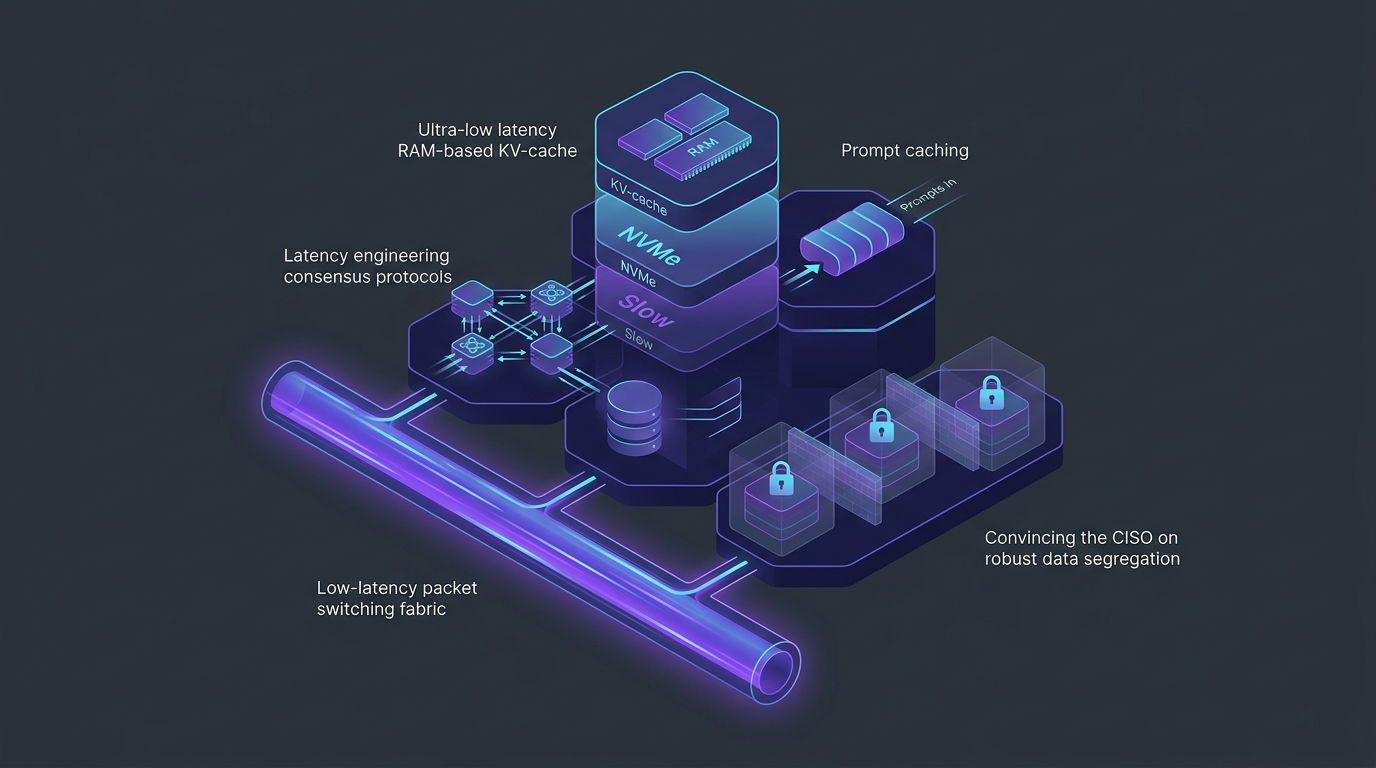
Below is the reference production topology demonstrating how Architecture Masterclass: High-Throughput KV-Cache & Token Economics isolates execution, enforces schema boundaries, and integrates with enterprise data stores:
flowchart LR
    Client["Client / Edge Request"] --> Gateway["API & Security Gateway<br/>(IAM + Schema Validation)"]
    Gateway --> Core["Architecture Masterclass: High-Throughput KV-Cache & Token Economics<br/>(Deterministic Engine)"]
    Core --> Storage[("Cloud SQL / BigQuery<br/>Grounded State")]
    Core --> Telemetry["OpenTelemetry & Cost Guardrails"]
Production Code Implementation
Rather than relying on untyped dictionaries or implicit runtime state, enforce strict boundary validation around Architecture Masterclass: High-Throughput KV-Cache & Token Economics:
from pydantic import BaseModel, Field

class ExecutionContract(BaseModel):
    tenant_id: str = Field(..., description="Isolated enterprise tenant identifier")
    concept_target: str = Field(default="Architecture Masterclass: High-Throughput KV-Cache & Token Economics")
    max_latency_ms: int = Field(default=150, ge=10, le=5000)

def execute_verified_workflow(contract: ExecutionContract) -> dict:
    """Executes Architecture Masterclass: High-Throughput KV-Cache & Token Economics within strict production guardrails."""
    return {
        "status": "verified",
        "tenant": contract.tenant_id,
        "engine": contract.concept_target,
        "slo_compliant": True,
    }
Official Blueprints, Forks & Citations
Next Steps
Ready to put this blueprint into practice? Here is your immediate action plan:
- Benchmark Your Current Baseline: Measure your current P99 latency and compute cost per thousand operations before refactoring.
- Explore the Primary Blueprint: Review the official source and documentation at https://cloud.google.com/architecture and fork the reference implementation into an isolated sandbox.
- Enforce Deterministic Contracts: Wrap all external I/O and tool boundaries in strict Pydantic v2 schemas with automated verification gates.