
News Flash: How Claude is uplifting biomolecular, wants to give your, & 3 Architect Dispatches?
1. Claude Uplifts Biomolecular Modeling via Code Optimization
The News Highlight:
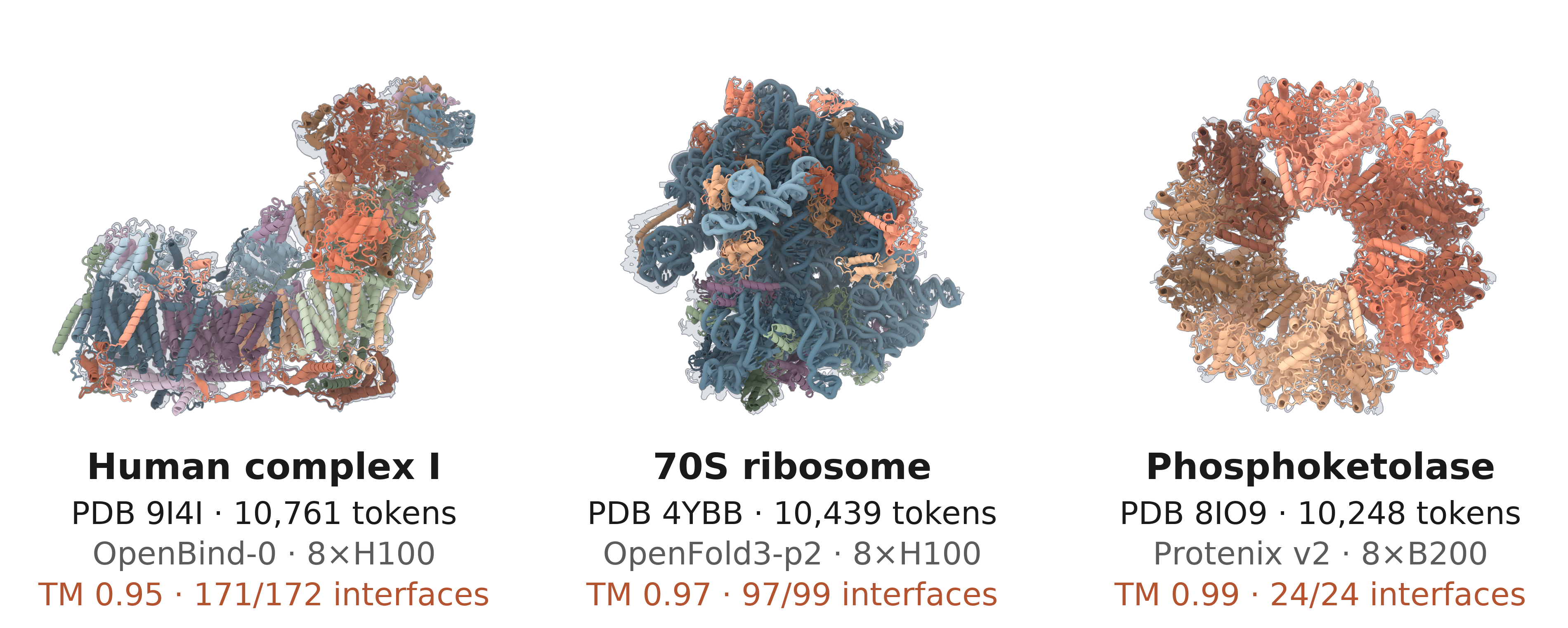
Anthropic has demonstrated Claude’s capability to optimize over 30 open-source biomolecular models, resulting in an average 4x speed increase. Key technical achievements include the creation of a low-memory mode that allows the prediction of large biomolecular systems (over 10,000 tokens) on a single NVIDIA GPU. Anthropic is open-sourcing this optimized code and launching a $1 million protein design competition with Adaptyv Bio to validate these computational designs in physical "wet labs."
My Analysis:
This represents a shift from "AI for Chat" to "AI for Science" (AI4S) at the compiler and optimization level. By using Claude to refactor existing scientific codebases, Anthropic is addressing the primary bottleneck in drug discovery: compute cost and memory constraints. The ability to run massive protein simulations on a single GPU—rather than expensive clusters—democratizes high-end biotech research. From a first-principles perspective, this isn't just about better models; it's about using LLMs as expert software engineers to optimize the specialized kernels that run scientific simulations.
- Primary Source: How Claude is uplifting biomolecular modeling
2. Google Introduces "CC": The Cloud-Based Family AI Agent
The News Highlight:
Google is testing "CC," an AI agent designed for households. Unlike individual assistants, CC operates on a shared family cloud computer and account, synthesizing shared emails, calendars, and files into daily briefings and actionable plans. It can coordinate activities for up to six people and fill out forms autonomously, though it requires explicit permission before acting on external tasks. The project is currently a US-based experiment with a waitlist.
My Analysis:
We are seeing the transition from "Personal AI" to "Entity AI." The architectural challenge here is multi-tenant privacy within a single "family" unit. By giving the family its own "cloud computer," Google is attempting to solve the context-fragmentation problem where Mom’s calendar doesn't talk to Dad’s emails. The "permission-based action" model is a critical safety layer for agentic workflows; however, the real test will be how Google handles the data sovereignty of minors and the inevitable "hallucinations" in scheduling that could disrupt household logistics.
- Primary Source: CC is an AI agent for families and groups
3. Claude Code Projects: Shifting from Folders to Conversational Workflows
The News Highlight:
Anthropic has redesigned Claude Code Projects to move beyond static file storage toward dynamic, conversation-based task management. The new system uses "threads" for parallel operations, allowing the AI to delegate tasks, coordinate sub-processes, and assemble results across cloud sessions. It leverages shared memory to maintain context over long-term builds. The feature is currently in beta for select subscribers.
My Analysis:
The "folder" is a legacy construct of the GUI era; the "conversation" is the native construct of the Agentic era. By treating a coding project as a persistent state of memory rather than a directory of text files, Anthropic is enabling "asynchronous development." Developers can now assign high-level goals, and the agent manages the micro-tasks in parallel threads. This reduces the cognitive load of context-switching and positions the LLM as a Project Manager/Lead Developer rather than just a code completion tool.
- Primary Source: Projects redesigned: from folder to conversation
4. Noam Brown on Multi-Agent Swarms and Recursive Self-Improvement
The News Highlight:
In a deep-dive interview, OpenAI researcher Noam Brown discussed the future of reasoning models, multi-agent systems, and the path to Recursive Self-Improvement (RSI). Brown, a pioneer in AI self-play (e.g., Libratus, Cicero), explored how automating AI research could lead to an explosion in mathematical progress and the critical need to ensure model alignment before models begin to autonomously improve their own architectures.
My Analysis:
Brown’s focus on "System 2" thinking (deliberative reasoning) is the current frontier of frontier models. The most provocative takeaway is the concept of "Agent Swarms" for research. If we can move from a single model trying to solve a problem to a swarm of agents using self-play to verify and critique each other, the speed of discovery in fields like fluid dynamics (Navier-Stokes) could accelerate exponentially. The bottleneck is no longer just data, but the "compute-at-inference" required for models to "think" through complex proofs.
5. LLM Classification as a Feature Engineering Problem
The News Highlight:
A new technical analysis argues that using LLMs as direct classifiers is often suboptimal due to calibration and threshold control issues. Instead, the post suggests treating LLM outputs as "features" within a larger machine learning pipeline. By extracting structured signals from unstructured data using an LLM and then feeding those signals into traditional, well-calibrated models, developers can achieve higher precision and better recall management.
My Analysis:
This is a necessary "reality check" for enterprise AI. Many developers treat LLM prompts as a "magic box" for classification, but LLMs lack the statistical rigor of traditional classifiers (like Logistic Regression or XGBoost) when it comes to probability calibration. The "LLM-as-Feature-Extractor" pattern is the superior architectural choice for production systems. It combines the semantic understanding of LLMs with the mathematical reliability of classical ML, allowing for better risk management in automated decision-making.
- Primary Source: LLM Classification Is Feature Engineering
Morning Executive Comparison Matrix
| Dispatch | Core Domain | Production Maturity | My Recommendation |
|---|---|---|---|
| Claude Biomolecular | Biotech / AI4S | High (Open Source) | Deploy for specialized compute optimization. |
| Google CC Agent | Consumer / Ambient AI | Experimental (Beta) | Watch for privacy/permission architecture patterns. |
| Claude Projects | DevTools / Agentic | Beta | Transition from "Copilot" to "Agentic PM" workflows. |
| Noam Brown / RSI | Frontier Research | Theoretical / R&D | Monitor for breakthroughs in "System 2" reasoning. |
| LLM Classification | Data Engineering | Production Ready | Shift from direct LLM labels to LLM-based feature extraction. |