News Flash: How Claude is uplifting biomolecular modeling, wants to give your family its, & 3 More Architect Dispatches — What Changes Today?
1. How Claude is uplifting biomolecular modeling
The News Highlight:
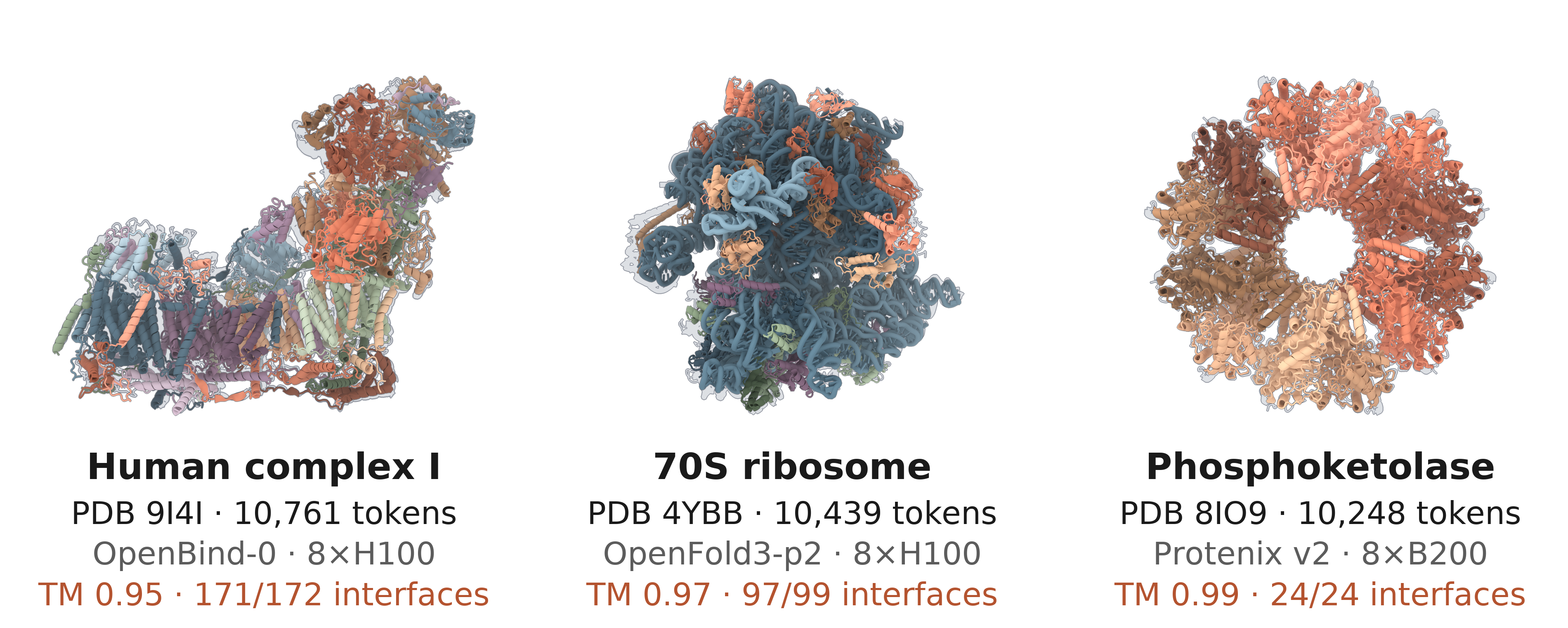
Anthropic's Claude has successfully optimized over 30 open-source biomolecular models, achieving an average 4x speed increase in under four weeks. More impressively, they developed a low-memory mode that allows the prediction of massive biomolecular systems (over 10,000 tokens) on a single NVIDIA GPU node. Anthropic is open-sourcing this optimized code and launching a $1 million protein design competition in partnership with Adaptyv Bio to accelerate drug discovery.
My Analysis:
As a Solutions Consultant, I constantly see Life Sciences enterprises bottlenecked by compute constraints when running complex simulations. The ability to run 10,000+ token biomolecular systems on a single NVIDIA GPU node is a massive architectural breakthrough. It drastically lowers the barrier to entry and operational costs for computational biology. For enterprise R&D teams, this means you can scale your drug discovery pipelines without linearly scaling your GPU cluster costs. The fact that this is open-sourced means we will likely see a rapid integration of these optimizations into standard bioinformatics workflows.
2. Google wants to give your family its own cloud computer
The News Highlight:
Google is experimenting with a new AI agent designed for families, running on its own dedicated "cloud computer" and Google account. This agent aggregates shared household emails, files, and calendars to generate daily briefings, coordinate activities for up to six people, and even fill out forms. Crucially, it operates with strict permission boundaries, asking for consent before acting outside the defined group.
My Analysis:
While this is positioned as a consumer product, the architectural signal here is highly relevant to what we are building in the enterprise space at Google Cloud. This "family cloud computer" is essentially a multi-tenant, secure enclave for a localized agentic swarm. The way it handles shared context (calendars, files) while maintaining strict permission boundaries before executing actions is exactly the blueprint needed for departmental AI agents (e.g., an HR agent or a DevOps agent). I highly recommend enterprise architects study this permission-gated, shared-memory model as a precursor to secure enterprise agent orchestration.
3. Projects redesigned: from folder to conversation
The News Highlight:
Anthropic has revamped Claude Code Projects, transitioning them from static repositories into dynamic, conversational workspaces. These redesigned projects automate task delegation, coordinate parallel operations via threads, and assemble results across cloud sessions. Utilizing shared memory, the system adapts based on progress to ensure efficient task execution and context retention.
My Analysis:
In my work at bicarait.com, I've noticed that developer productivity isn't just about writing code faster; it's about managing the cognitive load of context switching. This update shifts the paradigm of AI from a simple code-completion tool to an active, stateful project manager. By leveraging parallel threads and shared memory across sessions, Claude is effectively acting as an orchestration layer for the development lifecycle. For engineering teams, this means we need to start treating our IDEs and repositories not just as storage, but as active, agentic environments that participate in the build process.
4. Noam Brown – Agent swarms, alignment, & recursive self-improvement
The News Highlight:
In a recent interview, OpenAI research scientist Noam Brown discussed the future of reasoning models, reinforcement learning, and multi-agent AI. Brown, a foundational figure in reasoning models, explored the implications of automating AI research, the mechanics of agent swarms, and the critical need to verify model alignment before recursive self-improvement (RSI) is triggered.
My Analysis:
Noam Brown's insights are a required listen for anyone designing future-proof AI architectures. The industry is clearly moving away from single-shot, zero-shot LLM calls toward reinforcement learning and multi-agent swarms that debate and self-correct (System 2 thinking). From an enterprise architecture standpoint, this means our infrastructure must evolve to support asynchronous, long-running agentic processes rather than just synchronous API calls. Furthermore, his warnings on recursive self-improvement highlight why robust AI governance and alignment frameworks must be implemented now, before these swarms become autonomous.
5. LLM Classification Is Feature Engineering
The News Highlight:
A new technical deep-dive argues that using LLMs as direct classifiers is fraught with challenges, particularly regarding calibration and threshold control. Because LLMs output hard labels without reliable confidence scores, trading off precision and recall becomes difficult. The author suggests that LLM classification should instead be treated as a feature engineering problem within a broader machine learning pipeline.
My Analysis:
I completely agree with this perspective. In my consulting engagements, I frequently see clients struggle when they try to replace deterministic ML classifiers entirely with generative LLMs. LLMs are fantastic at extracting unstructured data, but they lack the calibrated log probabilities required for strict enterprise decision-making. The most mature production pattern I recommend is using the LLM to extract rich features from messy data, and then feeding those features into a traditional, calibrated model (like XGBoost or a random forest) to make the final classification. It bridges the gap between the flexibility of GenAI and the reliability of traditional MLOps.
Morning Executive Comparison Matrix
| Dispatch |
Core Domain |
Production Maturity |
My Recommendation |
| Claude Biomolecular |
Life Sciences AI |
High (Open-sourced) |
Evaluate for R&D pipelines to drastically reduce GPU inference overhead. |
| Google Family Cloud |
Consumer / Multi-Agent |
Beta / Experiment |
Monitor architecture for enterprise group-agent and shared-memory patterns. |
| Claude Code Projects |
Developer Tools |
Beta |
Integrate into dev workflows to test AI-driven parallel task delegation. |
| Noam Brown on Swarms |
Frontier AI Research |
Conceptual / Emerging |
Prepare enterprise infrastructure for asynchronous, multi-agent swarm patterns. |
| LLM Classification |
MLOps / Feature Eng |
Production-Ready |
Shift from zero-shot LLM classification to LLM-as-a-feature extraction pipelines. |